

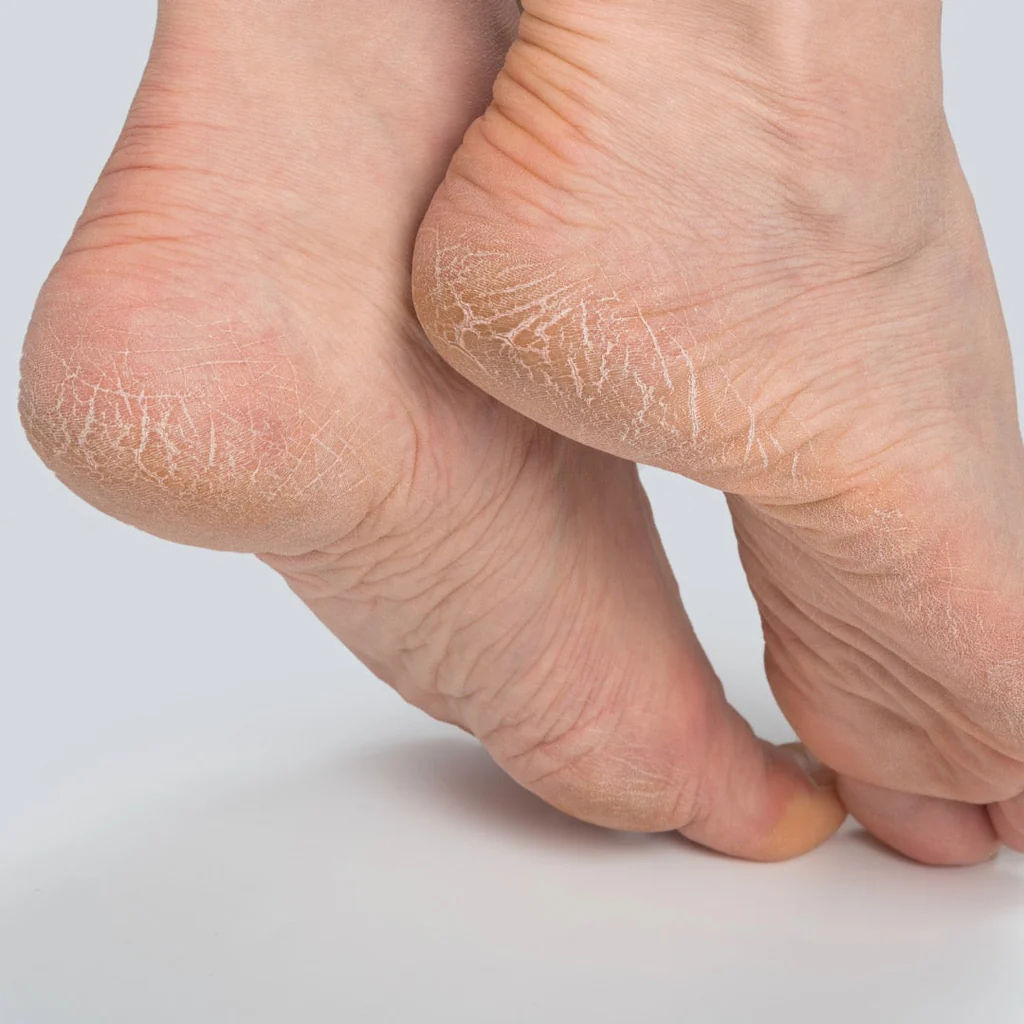
During winter, humidity levels drop, and cold winds remove moisture from the skin. The skin’s natural protective barrier becomes weak, making it difficult to retain hydration. As a result, the skin turns dry, rough, and tight, especially on areas that are exposed or have fewer oil glands.
How Dryness Turns Into Cracks and Infections
When dryness is ignored, the skin starts cracking. Heels develop deep fissures, lips split, and small wounds appear. These cracks allow bacteria and fungi to enter the skin, increasing the risk of painful infections, redness, swelling, and slow healing.
Why Heels, Lips, and Hands Are Most Affected
Heels and lips lack oil glands, and hands are frequently washed, which removes natural oils. Continuous exposure to cold air, hard surfaces, and pollution makes these areas the first to show signs of damage during winter.
Who Is at Higher Risk in the Cold Season
People with diabetes, weak immunity, poor circulation, or dehydration face more severe winter skin issues. Children and the elderly are also more vulnerable because their skin barrier is naturally weaker.
Warning Signs That Should Not Be Ignored
Painful cracks, bleeding heels, burning sensation, persistent itching, redness, foul smell, or repeated infections are signs that skin damage has gone beyond dryness and needs attention.
Simple Home Remedies Using Everyday Ingredients
- Apply coconut oil, mustard oil, or olive oil on heels and dry skin before bedtime.
- Use ghee or honey on cracked lips to promote healing.
- Soak feet in lukewarm water with salt to soften hardened skin.
- Apply fresh aloe vera gel to calm irritation and redness.
- Wash infected areas gently with neem-boiled water to reduce germs.






Leave a Reply