


Hypertension develops through a mix of genetic predisposition and lifestyle choices. A diet high in salt and processed foods, excess body weight, limited physical activity, chronic stress, excessive alcohol consumption, and smoking all elevate the risk. Age also plays a major role, as arteries stiffen and blood vessels lose flexibility over time. Underlying medical issues such as kidney disease, thyroid disorders, or sleep apnea can trigger secondary hypertension. Furthermore, urbanization, sedentary behavior, and high-sodium modern diets are significant contributors.
What Causes Hypertension? Understanding the Key Risk Factors
Hypertension develops through a mix of genetic predisposition and lifestyle choices. A diet high in salt and processed foods, excess body weight, limited physical activity, chronic stress, excessive alcohol consumption, and smoking all elevate the risk. Age also plays a major role, as arteries stiffen and blood vessels lose flexibility over time. Underlying medical issues such as kidney disease, thyroid disorders, or sleep apnea can trigger secondary hypertension. Furthermore, urbanization, sedentary behavior, and high-sodium modern diets are significant contributors.
How Hypertension Impacts the Body: The Key Organs and Systems Affected
Though labeled a “blood pressure” issue, hypertension affects far more than just the heart. The heart itself becomes overworked, leading to thickening of its walls (left ventricular hypertrophy) and a reduction in pumping efficiency. Arteries and blood vessels gradually become less elastic and more prone to narrowing, which heightens the risk of atherosclerosis and compromised circulation. Kidneys suffer because high blood pressure damages the tiny filtering vessels, often leading to chronic kidney disease. In the brain, hypertension increases stroke risk and can accelerate cognitive decline. The eyes are not spared either damaged retinal vessels can impair vision and trigger retinopathy.
Different Forms of Hypertension and Their Characteristics
- Primary (Essential) Hypertension: This is the most common form, accounting for the majority of cases. It develops gradually over the years due to a combination of lifestyle, environmental, and genetic factors.
- Secondary Hypertension: This form stems from another identifiable condition, for example, kidney disease, endocrine disorders, medication side-effects, or sleep apnea. Treating the underlying cause often improves the blood pressure.
Recognizing the type of hypertension is vital because it influences treatment strategy and urgency.
Current Data of Hypertension in India
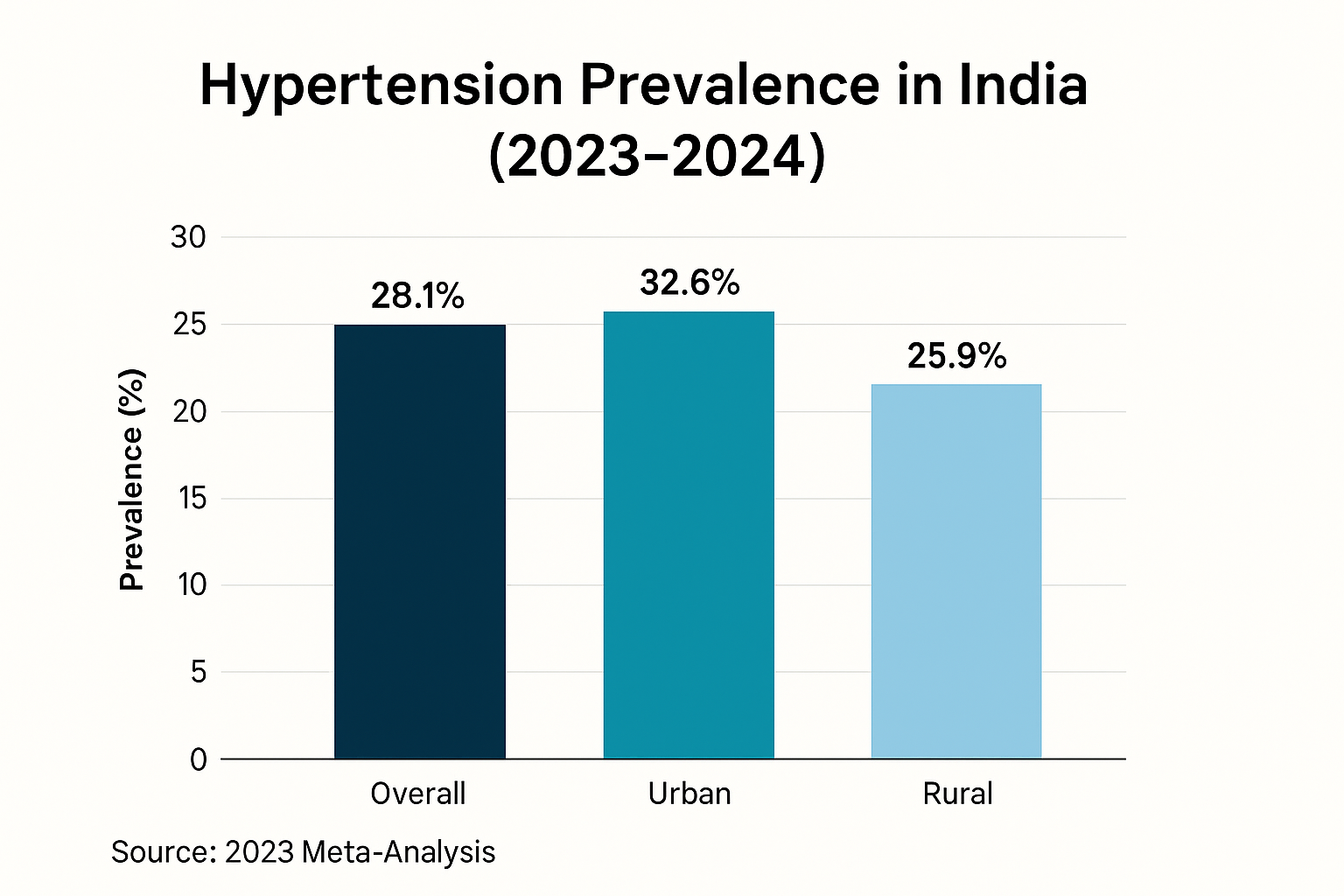
Hypertension has reached alarming levels in India. A 2023 meta-analysis found the age-standardized national prevalence at 28.1%, with urban areas at 32.6%, and rural areas at 25.9%. jamanetwork.com Another comprehensive survey from 2019-21 estimated overall prevalence at 22.6%, with men at 24.1%, women at 21.2%, and those aged 60+ facing levels up to 48.4%. BioMed Central Alarmingly, only about 12% of all adults with hypertension are reportedly achieving adequate blood pressure control. These figures emphasize the size of India’s silent hypertension crisis and the urgent need for stronger prevention and management efforts.
How Can Hypertension Be Managed and Treated Effectively?
Management of hypertension demands a two-pronged approach: lifestyle modification and medical support when required. Key strategies include adopting a diet rich in fruits, vegetables, whole grains, lean protein, while limiting salt, saturated fats, and processed foods. Regular aerobic exercise (such as 150 minutes per week) improves vascular health and lowers blood pressure. Maintaining a healthy weight and waist circumference reduces workload on the heart and arteries. When lifestyle changes aren’t enough, doctors may prescribe antihypertensive medications. Adherence and monitoring are essential. Stress management and quality sleep also play a significant role in keeping blood pressure stable. Regular screening ensures early detection since hypertension often remains symptomless.
Precautions & Things to Keep in Mind
Because hypertension often gives no warning signs, prevention and vigilance are paramount. Don’t ignore your blood pressure readings even if you “feel fine.” Avoid diets high in salt, limit alcohol intake, quit smoking, and reduce sedentary habits. Be alert to other health conditions, such as diabetes or kidney issues, which amplify risk. If you’re diagnosed, ensure you remain consistent with medication and follow-up visits. Untreated hypertension dramatically increases the chances of a heart attack, stroke, or kidney failure.
Final Thoughts
Hypertension is more than just a number on the monitor; it’s a serious condition silently affecting your heart, kidneys, brain, and vision. The good news? It’s largely preventable and manageable with the right actions. Alongside lifestyle change, Hridu Rakshak Ras, an Ayurvedic heart tonic from YTM India, offers additional support for cardiovascular health. With ingredients specifically chosen to promote circulation, reduce vascular stress, and help maintain healthy blood pressure, it complements your wellness routine naturally. By combining smart choices with trusted natural support, you can take control of your heart’s health today for a healthier tomorrow.






Leave a Reply